Why this search gets hard fast
It becomes harder to identify rare coin searches because rarity depends on year, mint, variety, and condition rather than age alone. The app gives you a faster first pass before you open catalogs, auctions, or collector forums.
What the app checks from a photo
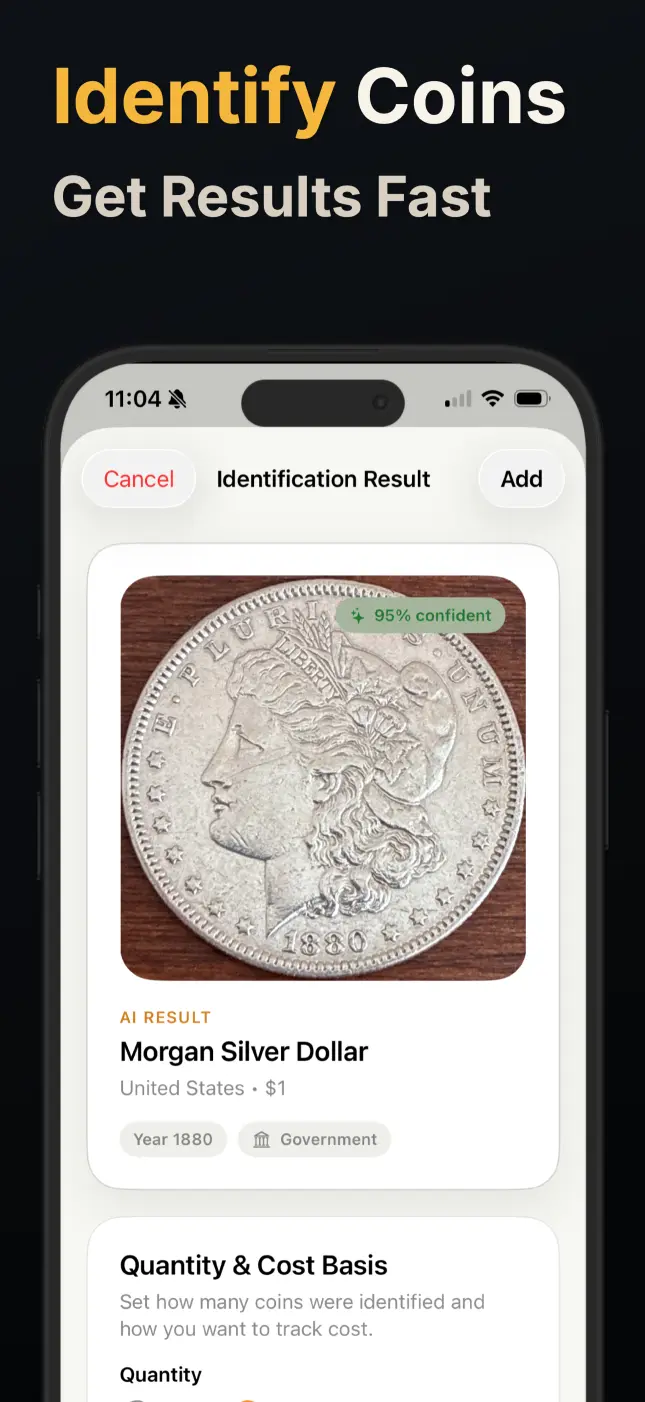
The app compares visible details like text, dates, mint marks, portraits, symbols, edge patterns, shape, and metal cues against a growing coin database.
What you get after a scan
Each scan can surface the coin name, country, date range, denomination, metal composition, and a value estimate when available. You can then save the result or keep researching from a clearer starting point.
Where this landing page helps most
This page is especially useful for curious finders, resale listings, and collectors screening coins before deeper research. It is built for people who want a clearer starting point before they buy, sell, catalog, or clean a coin.
Related guides
Continue into nearby coin topics in this language.
Back to guides · Open the full guide hub for this language or keep browsing related topics below.
Track Your Precious Metals Portfolio with Coin Value Identifier
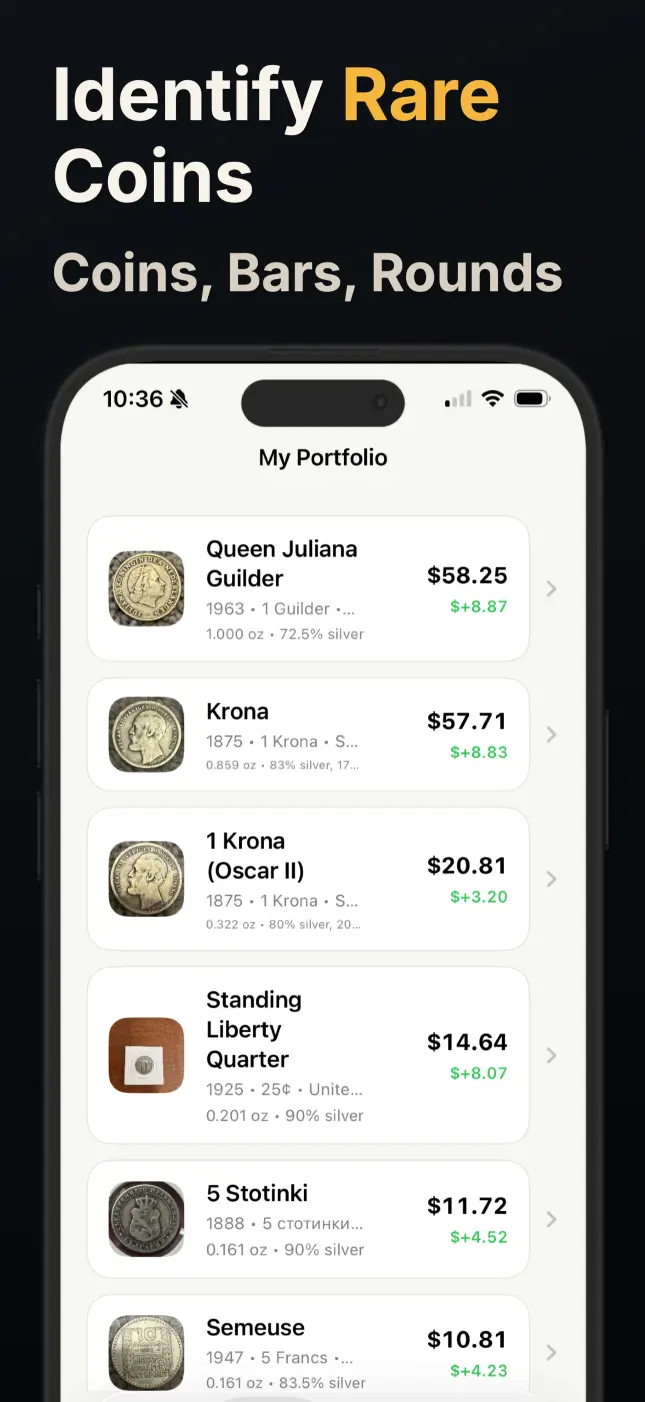
If your collection mixes numismatic pieces with bullion value, you need one place to follow metal exposure, coin details, and changing estimates.
Open guideWhat Coin Is This? Start with a Photo
When a coin has unfamiliar text, symbols, or portraits, guessing the country or series by hand wastes time. Start with a quick scan instead.
Open guideFound in My Change? Check It Before You Spend It
Pocket change sometimes hides older dates, silver years, or collectible series that look ordinary at first glance. A fast scan helps you spot what deserves a second look.
Open guideMake Sense of an Inherited Coin Collection
Boxes, envelopes, and jars from a relative can hold everything from common keepsakes to coins worth researching carefully. Start by turning unknown pieces into a clearer list.
Open guideStart with a photo
Download Coin Value Identifier and turn uncertain coin finds into faster, clearer answers.
Get the app Scan to download