First, don't clean, don't split, don't rush
Three mistakes cost families the most money. Cleaning coins to make them look nicer destroys collector value. Taking coins out of their original holders, especially government proof and mint sets, separates them from the packaging that proves what they are. And selling the whole lot to the first buyer who offers a single price usually means the buyer gets the good coins cheaply.
There is rarely a deadline. Coins don't spoil, and an afternoon spent sorting can change the value of a collection a great deal.
Sort into four piles
Most collections fall into a few groups, and each one is valued differently. Sorting tells you where to spend your time.
- Modern face-value coins: post-1964 US circulation coins, recent world coins and travel money
- Silver and gold: US dimes, quarters and halves dated 1964 or earlier, silver dollars, bullion coins and rounds
- Government sets: proof sets, mint sets and commemoratives still in their original packaging
- Collector coins: albums, slabbed coins in sealed plastic holders, older type coins and anything that looks old or unusual
Find the silver quickly
In US collections, the silver is easy to find by date and by the edge. Dimes, quarters and half dollars dated 1964 or earlier are 90% silver, and their edges are solid white rather than showing a copper stripe. Kennedy halves from 1965 to 1970 are 40% silver. Silver dollars, Morgan (1878 to 1921) and Peace (1921 to 1935), each contain about three quarters of an ounce of silver.
Silver is worth at least its melt value, which moves with the spot price. A pile of old dimes and quarters that looks like small change can be worth several hundred dollars.
Look for the coins that need a second look
Coins in sealed holders from PCGS, NGC or ANACS have already been graded, so the holder states the grade and the price can be checked online. Albums are worth paging through slowly: collectors filled them over years and often tracked down the scarce dates. Gold coins of any kind, coins dated before 1900, and anything with an obvious mistake also deserve a closer look.
The rare coin checker guide lists the key dates collectors look for in the main US series.
Make an inventory before anyone values it
An inventory protects you when you ask for offers, divide coins among family members or need a figure for an estate. Photograph each coin, front and back, and record the country, year, mint mark and quantity. For sets, record the year and type of set.
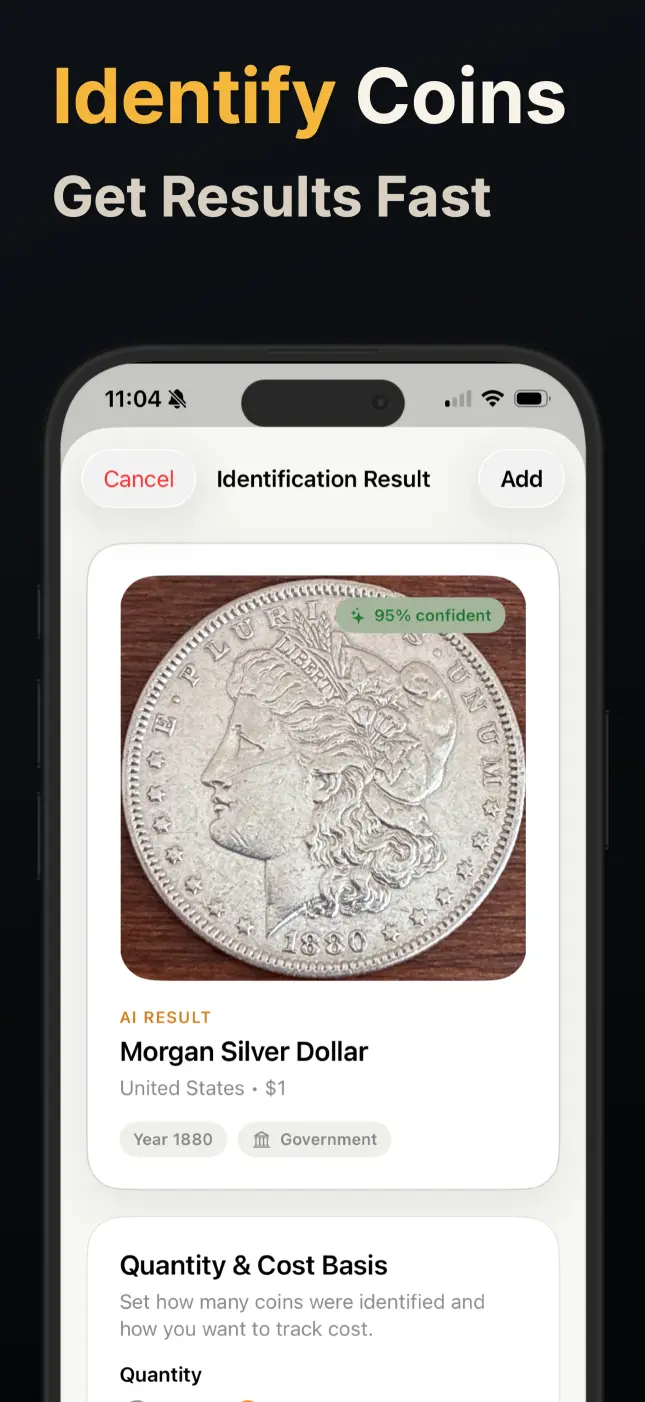
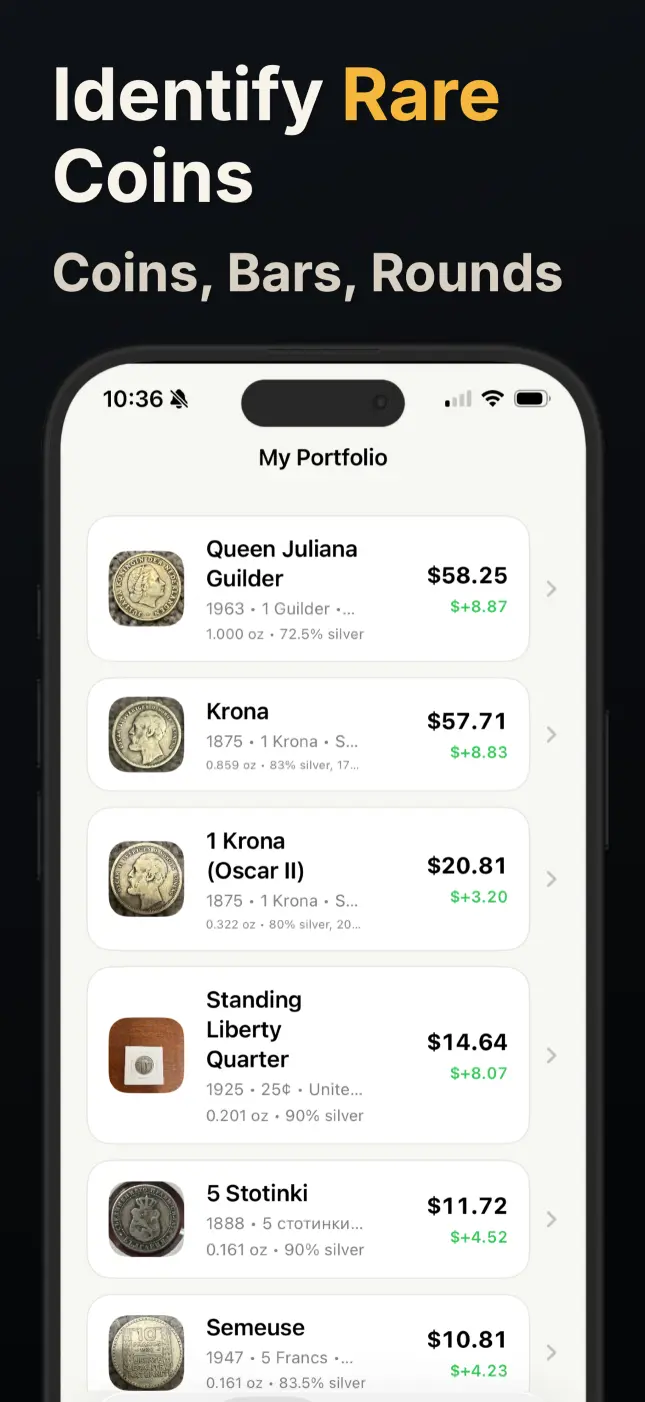
Coin Value Identifier speeds this up. A photo of both sides identifies the coin, the year and the mint mark, and shows a melt value for silver and gold at the live spot price or an estimated value for collectible coins. Saved coins form a portfolio with photos, quantities and notes, which Pro can export as a spreadsheet file. The app is free to download on iPhone and iPad with two free identifications and a free portfolio of five coins; a larger collection needs Pro. The coin collection app guide shows how to set up the catalog.
An app's figures are a guide, not a formal valuation. If you need a valuation for probate, insurance or tax, use a qualified appraiser.
Selling: get more than one offer
Take the inventory to two or three dealers and ask each to price the coins separately, not as a lot. Silver will be offered at a percentage of melt value; collector coins should be priced individually. For valuable single coins, auction houses and online auctions often reach more buyers than a local shop. Keep the family pieces you want before any of this starts.
Questions about inherited coins
What should I do with an inherited coin collection?
Don't clean anything, keep sets in their original packaging, sort the coins into face value, silver and gold, sets and collector coins, and make an inventory before you ask for offers.
How do I find out what an inherited coin collection is worth?
Identify each coin by year and mint mark, add up the melt value of the silver and gold, and check the collector coins and graded coins individually. For a formal figure, use a qualified appraiser.
Are old proof sets worth anything?
Most modern proof and mint sets sell for modest amounts, often close to their silver content if they contain silver. A few years are worth more. Keep them in their original packaging either way.
Should I sell coins to a pawn shop?
Get offers from coin dealers first. A specialist knows the difference between melt value and collector value, and you should compare at least two offers.
Can I identify a whole collection with my phone?
Yes, coin by coin. Coin Value Identifier identifies coins from photos of both sides and saves them to a portfolio. Two identifications and five portfolio coins are free; larger collections need Pro.
Related guides
Continue into nearby coin topics in this language.
Back to guides · Open the full guide hub for this language or keep browsing related topics below.
Foreign Coin Identifier: Identify World Coins You Can't Read
Foreign coins are easier to identify than they look. The country name is almost always on the coin, often in its own language or in Latin, and dates in other calendars convert with simple arithmetic.
Open guideError Coin Identifier: How to Check a Coin for Errors
Most coins that look wrong are damaged or worn, not mint errors. A real error happened at the mint and follows known patterns, so a few checks separate a coin worth researching from one that is not.
Open guideShould You Clean Old Coins? Why Cleaning Lowers Value
Cleaning is the most common way people lose money on old coins. Polish, vinegar and baking soda remove the original surface collectors pay for, and the damage cannot be undone. Identify the coin first, then decide.
Open guideBest Coin Identifier and Scanner Apps Compared (Nov 2026)
Most coin scanner apps are free to download and charge a subscription after a few scans, so ratings and a quick test with your own coins tell you more than any ranking. Here is how the popular apps compare, and how to choose.
Open guideStart with a photo
Download Coin Value Identifier and turn uncertain coin finds into faster, clearer answers.
Get the app Scan to download