Errors, varieties and damage are three different things
A mint error is a one-off mistake in striking a single coin: it was struck off center, on a clipped blank, or twice. A variety is a flaw in the die itself, so every coin struck by that die shows it; doubled dies and overdates are varieties. Damage is anything that happened after the coin left the mint, and it is by far the most common explanation for an odd coin.
The difference matters because collectors pay for errors and listed varieties, and nothing for damage. Before you research an unusual coin, rule damage out.
Doubled die or machine doubling
Doubling is the error people ask about most, and most of it is worthless. On a true doubled die, the second image is raised and rounded, with separate letters or numbers that look like a ghost image beside the first. Famous examples are the 1955 and 1972 doubled die Lincoln cents.
Machine doubling, also called strike doubling, happens when a die bounces during striking. It leaves a flat, shelf-like edge beside letters and numbers, as if they had been pushed sideways. It is very common and adds no value. If the doubling looks flat and sharp-edged, it is almost certainly machine doubling.
Errors worth looking for
These errors are real, recognizable and sometimes valuable. The value depends on how dramatic the error is and on the coin it happened to.
- Off-center strike: part of the design is missing and part of the blank is smooth; the more off center with the date still visible, the better
- Clipped planchet: a curved or straight bite missing from the edge, with the rim fading out on the opposite side
- Broadstrike: the coin is wider and flatter than normal because it was struck without the collar
- Die crack or cud: a raised line, or a raised blob joined to the rim, from a cracked or broken die
- Wrong planchet: a coin struck on a blank meant for another denomination or metal, such as the 1943 bronze cent
- Missing mint mark: for example the 1982 dime with no P, or the 1922 cent with no D
What is usually damage
Coins that are bent, scratched, discolored, plated or partly melted are almost always damaged after leaving the mint. A coin that is noticeably thinner or lighter than normal has often been in acid or a fire. A gold-colored cent or a copper-colored dime has usually been plated or toned. Coins that were squeezed in a vise or hammered can mimic broadstrikes, but the design will be distorted rather than complete and flat.
Weight is a good test. Mint errors usually weigh the same as a normal coin, unless the blank itself was clipped or wrong. If a coin weighs far less than it should with no missing edge, suspect damage.
How the app helps with an error check
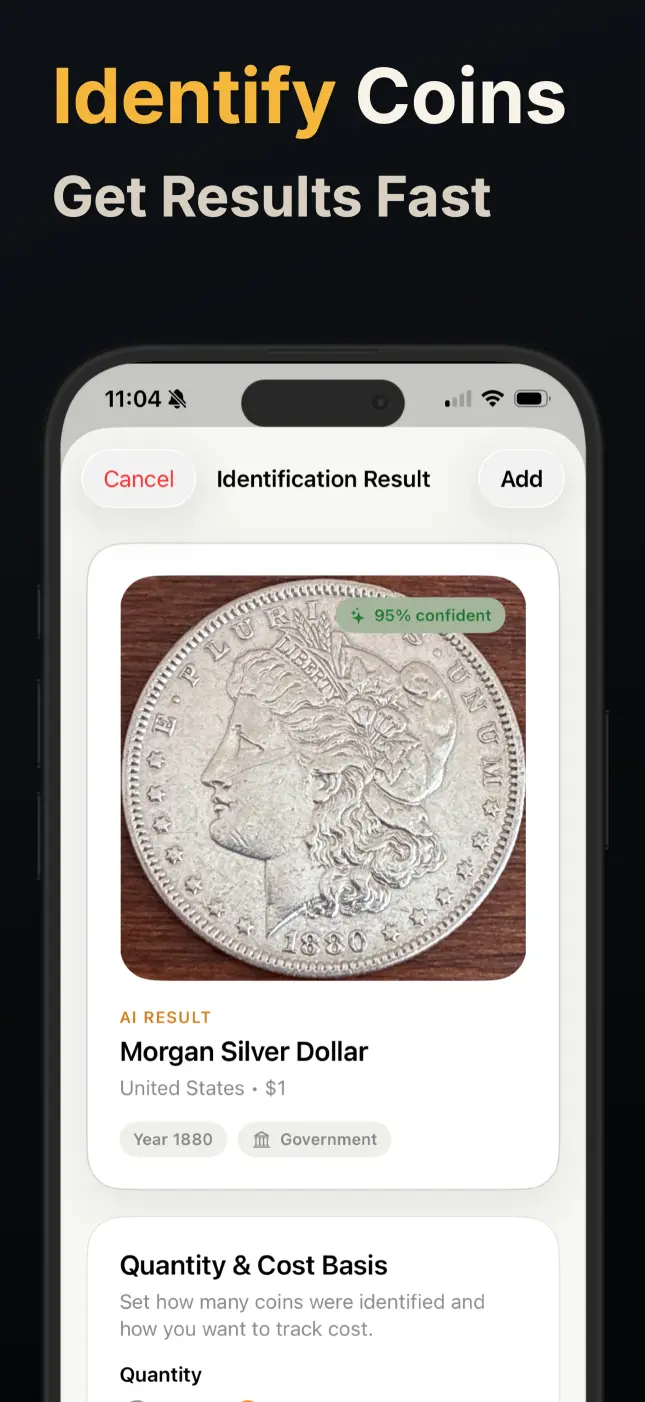
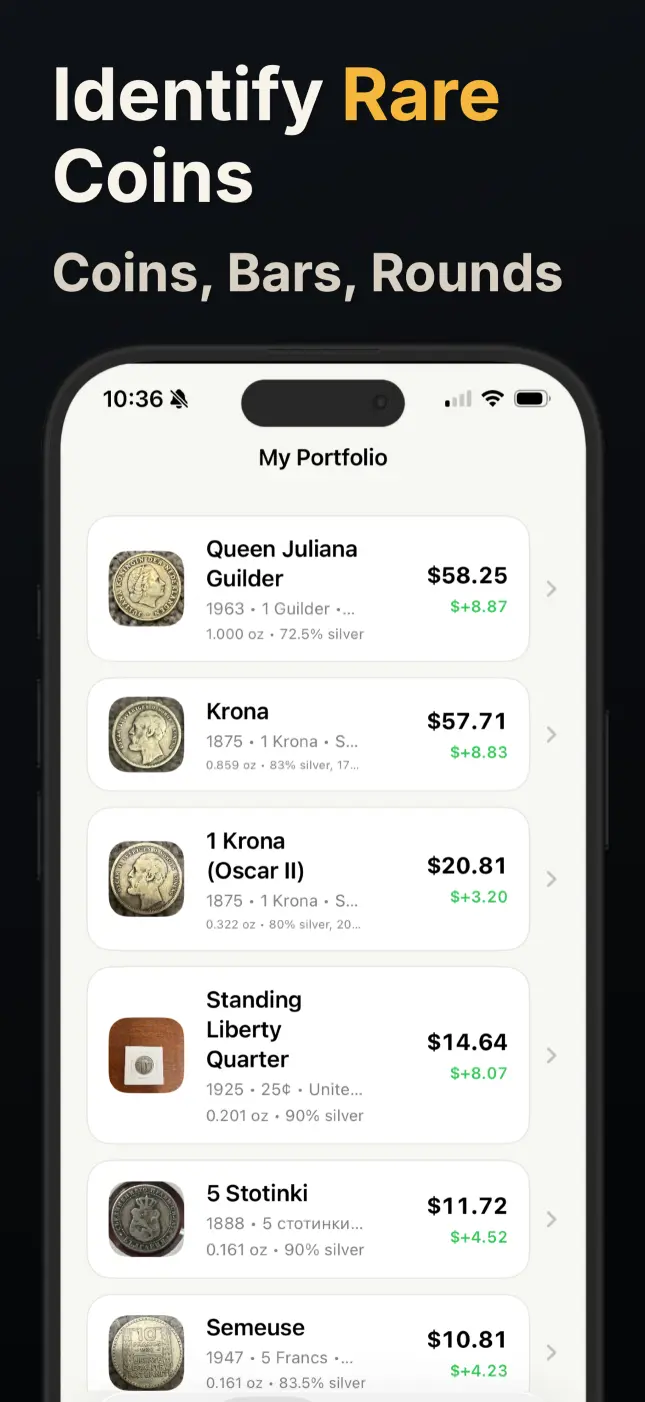
Coin Value Identifier does not detect errors or varieties, and no photo app can confirm a doubled die reliably. What it does is identify the coin, the denomination, the year and the mint mark from a photo of both sides, which is the information you need to look the coin up in a variety list. It also lists the normal weight and composition, so you can compare them with what the coin weighs on a kitchen or jewelry scale.
For a coin you believe is a genuine error, compare it with photos in a variety reference, or send it to an error specialist or a grading service. The rare coin checker guide lists key dates and varieties for the main US series.
Questions about error coins
How do I know if my coin is an error?
Check that the coin was not damaged after minting: no scratches, bends, plating or heat marks, and a normal weight. Then compare it with known error types such as off-center strikes, clipped planchets and doubled dies.
Is there an app that detects error coins?
No app can reliably confirm an error or variety from a photo. Apps such as Coin Value Identifier identify the coin, year and mint mark, which you need to look the coin up in a variety reference.
Is my doubled coin worth money?
Only if it is a doubled die, where the second image is raised and rounded. Flat, shelf-like doubling is machine doubling, which is common and adds no value.
What error coins are worth the most?
Famous examples include the 1943 bronze cent, the 1955 doubled die cent and dramatic off-center or wrong-planchet strikes. Value depends on the coin and on how obvious and complete the error is.
Where can I get an error coin checked?
Grading services such as PCGS and NGC attribute errors and varieties for a fee. Specialist error dealers and local coin clubs can often tell you for free whether it is worth sending.
Related guides
Continue into nearby coin topics in this language.
Back to guides · Open the full guide hub for this language or keep browsing related topics below.
Should You Clean Old Coins? Why Cleaning Lowers Value
Cleaning is the most common way people lose money on old coins. Polish, vinegar and baking soda remove the original surface collectors pay for, and the damage cannot be undone. Identify the coin first, then decide.
Open guideBest Coin Identifier and Scanner Apps Compared (Nov 2026)
Most coin scanner apps are free to download and charge a subscription after a few scans, so ratings and a quick test with your own coins tell you more than any ranking. Here is how the popular apps compare, and how to choose.
Open guideCoin Value Checker: How Much Is My Coin Worth?
A coin is worth the higher of two numbers: the metal it contains, or what collectors will pay for that exact date, mint mark and condition. Knowing which one applies tells you whether to spend it, keep it or research it.
Open guideSilver Coin Identifier: Which Coins Are Real Silver?
Whether a coin is silver usually depends on its country and date, not on how shiny it looks. Check the date against the cut-off years below, then confirm with the edge, the weight and a few simple tests.
Open guideStart with a photo
Download Coin Value Identifier and turn uncertain coin finds into faster, clearer answers.
Get the app Scan to download